Laser Gum Contouring: The Comprehensive Guide to Fixing a Gummy Smile

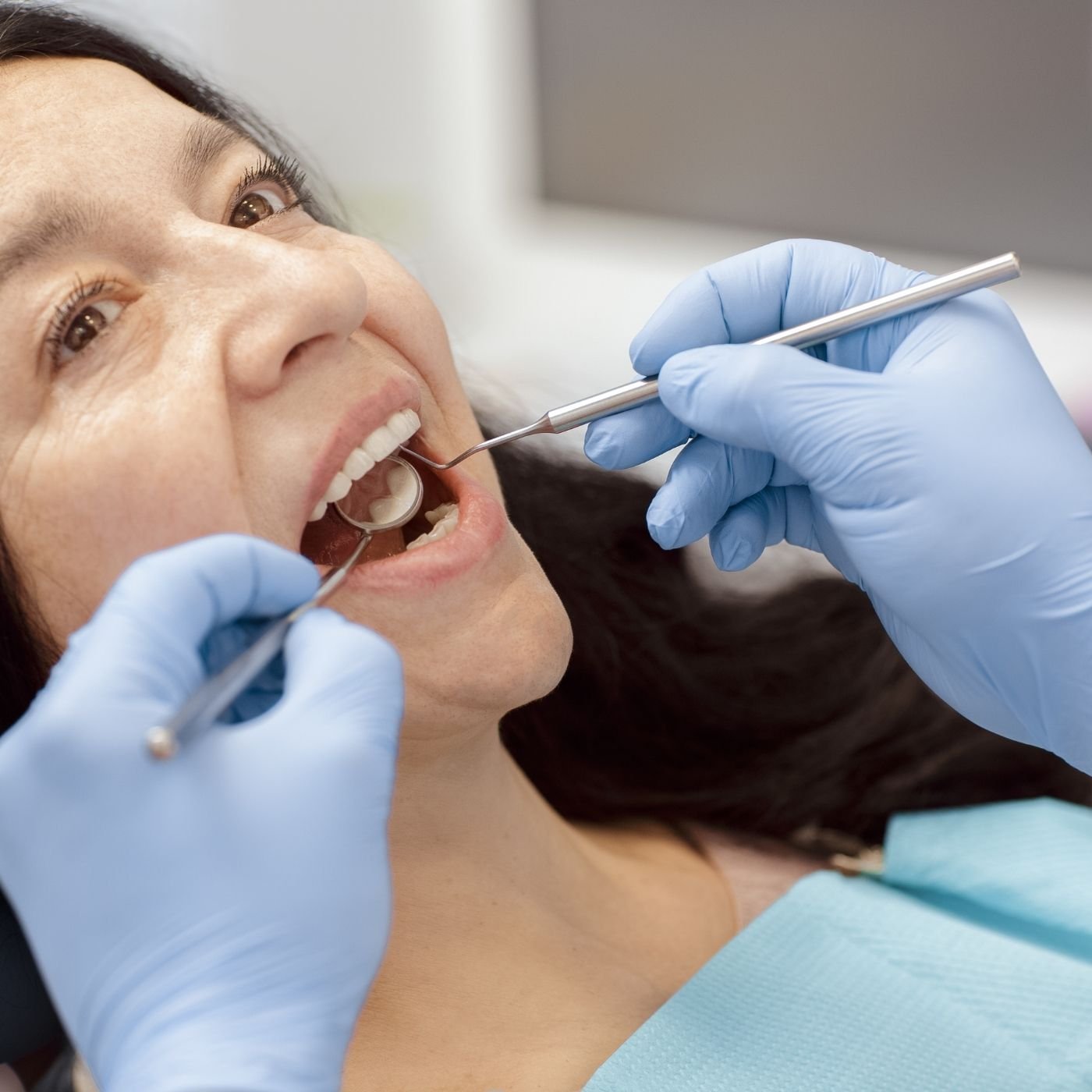
Laser Gum Contouring: The Comprehensive Guide to Fixing a Gummy Smile
By HealthGuideAZ Medical Editorial Team
Medically Reviewed by Board-Certified Periodontists and Cosmetic Dentists
When we think of a beautiful smile, we instinctively focus on the teeth. However, cosmetic dentists know that the gums serve as the crucial “frame” for the dental artwork. If the frame is uneven, overgrown, or asymmetrical, even the straightest, whitest teeth will look remarkably small and disproportionate. Laser Gum Contouring (Gingivectomy) is the highly precise, minimally invasive procedure designed to correct an excessive gingival display, commonly known as a “gummy smile.”
According to the American Academy of Cosmetic Dentistry (AACD), a balanced smile should display no more than 2 to 3 millimeters of gum tissue above the top teeth. In the past, removing excess gum tissue required a scalpel, painful stitches, and weeks of bleeding and recovery. Today, using advanced Diode and Nd:YAG lasers, dentists can gently vaporize away the excess tissue in minutes, instantly revealing the beautiful, full-sized teeth hiding underneath with virtually zero bleeding.
Whether you just got your braces off and noticed your gums are puffy, or you have always felt your teeth looked “too short,” understanding the biological causes of altered passive eruption, the concept of biologic width, and the difference between laser tissue removal and bone contouring is your vital first step toward a symmetrical, stunning smile.
Advanced Cosmetic Tool
Gingival Aesthetics & Gummy Smile Evaluator
Complete this clinical diagnostic evaluating your tooth-to-gum proportions, lip mobility, and orthodontic history to determine the physiological cause of your gummy smile and the ideal treatment modality.
⚠️ COSMETIC DIAGNOSTIC ALGORITHM: This tool analyzes aesthetic proportions, orthodontic history, and muscular lip movement to suggest treatment modalities. It possesses no medical validity. Proper evaluation requires X-rays and periodontal bone sounding by a licensed specialist.
Loading engine...
Powered by Health Guide AZ Cosmetic Algorithms
Comparative Table: Laser Contouring vs. Traditional Scalpel Surgery
| Clinical Aspect | Laser Gum Contouring (Diode) | Traditional Scalpel Gingivectomy |
|---|---|---|
| Bleeding & Sutures | Zero bleeding. The laser cauterizes instantly. No stitches needed. | Significant bleeding. Requires sutures (stitches) to close the tissue. |
| Pain & Anesthesia | Virtually painless. Often done with just a strong topical numbing gel. | Painful recovery. Requires deep local anesthetic injections. |
| Recovery Time | 24 to 48 hours. Can eat normally the next day. | 1 to 2 weeks. Requires a soft diet and pain management. |
| Precision | Microscopic. Shapes the gum architecture to a fraction of a millimeter. | Moderate. Harder to create perfectly scalloped, natural-looking edges. |
10 Crucial Truths About Gum Contouring
1. Your Teeth Are Probably Normal Size
A massive misconception is that patients with gummy smiles simply grew “tiny teeth.” In reality, the teeth are fully grown adult teeth, but they are hiding beneath a thick blanket of overgrown gum tissue. Contouring does not make the teeth larger; it simply uncovers them.
2. Altered Passive Eruption
During childhood, as your adult teeth erupt, the gums are supposed to naturally recede and settle near the neck of the tooth. In some people, this biological process fails (Altered Passive Eruption), leaving the gums permanently draped over the enamel. A laser instantly corrects this developmental glitch.
3. Crown Lengthening vs. Gingivectomy
A simple laser gingivectomy only removes soft gum tissue. However, if the underlying jawbone is too close to the edge of the tooth, removing just the gums will cause them to grow right back (violating the “biologic width”). In this case, the periodontist must perform Crown Lengthening, which involves removing a small amount of bone alongside the gums for a permanent result.
4. The “Post-Braces” Swelling (Hyperplasia)
Orthodontic brackets make it incredibly hard to floss. The resulting chronic plaque accumulation often causes the gums to become severely inflamed, puffy, and overgrown (Gingival Hyperplasia). Dentists frequently perform laser contouring the week braces come off to permanently remove the puffy tissue and finalize the new smile.
5. Hyperactive Lip Muscles
Sometimes your gums and teeth are perfectly proportioned, but your upper lip pulls up too high when you smile, exposing massive amounts of gum. In these cases, gum contouring is the wrong treatment. Instead, a few units of Botox injected under the nose safely weakens the elevator muscles, dropping the lip to a normal smiling height.
6. It Prepares Teeth for Veneers
Elite cosmetic dentists will almost never place porcelain veneers without evaluating the gumline first. If the gums are asymmetrical (one tooth has a higher gumline than the other), placing perfectly straight veneers will still look crooked. The gums must be laser-leveled first to create a symmetrical canvas.
7. Gum Depigmentation (Laser Bleaching)
Some patients have dark brown or black patches on their gums caused by excess melanin production or smoking. The same dental lasers used for contouring can be adjusted to gently peel away the top layer of pigmented tissue, revealing perfectly uniform, pink gums underneath in just one session.
8. It Improves Periodontal Health
Excess, floppy gum tissue creates deep pseudo-pockets where toxic bacteria hide and multiply, causing chronic bad breath and gingivitis. By trimming the excess tissue away, the pockets are eliminated, making the teeth infinitely easier to brush, floss, and maintain.
9. The Results Are Immediate
Unlike braces or clear aligners that take years, or teeth whitening that takes weeks, laser gum contouring provides a massive, dramatic aesthetic change the second you sit up from the dental chair. You leave the office with a completely brand-new smile architecture.
10. Medication-Induced Gingival Overgrowth
Certain systemic medications—particularly calcium channel blockers for high blood pressure, immunosuppressants, and anti-seizure drugs (like Phenytoin)—cause the gums to aggressively mutate and grow over the teeth as a side effect. Laser surgery is the fastest way to comfortably debulk this thick, fibrotic tissue.
Real Success Cases: Uncovering the Beauty
Case 1: The “Tiny Teeth” Insecurity
The Scenario: A 22-year-old female hated her smile because she felt she had “baby teeth.” Whenever she smiled or laughed, she showed 6 millimeters of pink gum tissue, making her teeth look incredibly short, wide, and square.
The Solution: An aesthetic Laser Gingivectomy. The cosmetic dentist applied a topical numbing gel, took a bone sounding to confirm the bone levels were healthy, and utilized a Diode Laser to sculpt away 3 millimeters of excess gingiva from her upper 8 anterior teeth.
The Result: The procedure took 30 minutes with zero bleeding. Her teeth were instantly elongated, restoring the perfect Golden Proportion (making them look gracefully rectangular rather than square). Her “baby teeth” were actually stunning adult teeth hidden all along.
Case 2: The Asymmetrical Arch
The Scenario: A 35-year-old male was preparing to invest $15,000 in a full set of porcelain veneers. However, the gumline over his right central incisor was 2 millimeters lower than his left incisor. The cosmetic dentist paused the treatment, noting that placing symmetrical veneers over asymmetrical gums would look entirely fake.
The Solution: Laser Tissue Leveling. The dentist used a laser to gently trim the right gumline to exactly match the zenith (highest peak) of the left gumline. They waited 3 weeks for the tissue to settle.
The Result: With a perfectly symmetrical gum framework established, the final porcelain veneers were bonded into place. The result was a flawless, Hollywood-tier smile that would have been impossible without the laser soft-tissue management.
Curiosity & Golden Tip
Did You Know? (The Sealing Effect)
Lasers don’t just cut; they bio-seal the human body in real-time.
The Phenomenon: When a scalpel cuts tissue, it severs capillaries and nerve endings, leaving them open and bleeding. A dental laser, operating at extreme temperatures (often around 1,000 degrees Celsius at the microscopic tip), instantly vaporizes the water in the tissue. In doing so, it simultaneously melts and welds the blood vessels and nerve endings shut. This is why laser gum surgery has no bleeding and significantly less post-operative pain—the nerves are literally sealed off from the air!
Golden Tip: Avoid the Acid Burn
The first 48 hours after laser contouring require a very specific diet.
The Rule: While there are no open wounds, the newly exposed gum edges are essentially fresh, raw tissue (similar to a mild sunburn). You must strictly avoid any acidic, spicy, or crunchy foods for two days. Eating a tomato, squeezing lemon into your water, or eating salsa will cause an intense, burning sting along the gumline. Stick to neutral, soft foods like oatmeal, eggs, and smoothies until the tissue toughens up.
10 Frequently Asked Questions (FAQ) – Laser Gum Contouring
1. Does laser gum contouring hurt?
2. How much does a Gingivectomy cost?
3. Will my dental insurance cover it?
4. Do the gums ever grow back?
5. How long does the procedure take?
6. What is a “Lip Repositioning” surgery?
7. Can I go to work the next day?
8. Will it make my teeth sensitive to cold?
9. How do I brush my teeth afterward?
10. Do I need an Oral Surgeon for this?
Safety: The Golden Proportion Expert
Gum contouring is purely an architectural art form. If a dentist trims the gum straight across without creating the natural “scalloped” crescent shape, the teeth will look blocky, unnatural, and fake. Always ensure the dentist providing your laser contouring has a deep background in cosmetic smile design. Ask to see their before-and-after portfolio specifically focusing on gingival aesthetics to ensure they understand proper tooth proportions.
Legal & Safety Disclaimer: HealthGuideAZ.com provides strictly educational content. While laser contouring is highly safe, aggressive tissue removal that violates the biological attachment to the bone can cause chronic, irreversible periodontal inflammation and jawbone loss. Always ensure your dentist takes X-rays and performs “bone sounding” to verify your skeletal anatomy before any soft tissue is permanently removed.
Search Keywords for Your Research
laser gum contouring, gummy smile correction, gingivectomy vs crown lengthening, altered passive eruption treatment, lip repositioning surgery, botox for gummy smile, gum depigmentation laser, dark gums bleaching, swollen gums after braces, gingival hyperplasia laser, biologic width dental, cosmetic dentist gum reshaping, aesthetic crown lengthening, smile design proportions, diode laser soft tissue surgery, excessive gingival display, fix short teeth, gummy smile botox cost, uneven gumline treatment, gum contouring recovery time, periodontal plastic surgery, receding gums vs overgrown gums, scaling and gingivectomy, laser dentistry pain, board certified periodontist
3D CBCT Scanning & Digital Impressions: The Future of Precision Dentistry
Clear Aligner Therapy: The Comprehensive Guide to Invisible Orthodontics
Zirconia and E.max Dental Crowns: The Ultimate Guide to Restorative Strength and Aesthetics
All-on-4 & All-on-6 Full Arch Rehabilitation: The Definitive Guide
Dental Care & Oral Rehabilitation: The Comprehensive Guide to Smile Restoration
Top 200 Cities Worldwide for Healthcare & Medical Tourism
⚠️ LIABILITY WAIVER AND CLINICAL WARNING: This tool is strictly an algorithmic and educational simulation. It holds no diagnostic validity. Dental surgery involves placing titanium structures in the jawbone and altering permanent tooth structure. We disclaim any civil, medical, financial, or billing liabilities tied to its use. An online simulation cannot evaluate true bone density (via CBCT scan), active periodontal disease, or nerve mapping. Strictly consult a Board-Certified Dentist or Prosthodontist for a comprehensive physical evaluation.
1. What is your primary dental concern right now?